By Pooya Firoozi & Morteza Soltanpour Abyaneh South Korea's Post-Crisis Model Offers Lessons for Iran's Economic Resilience
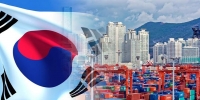
As Iran seeks to strengthen its economic position amidst regional challenges, understanding South Korea's comprehensive approach to economic resilience, energy security, and technological advancement provides a blueprint for strategic adaptation.
The Strait of Hormuz Crisis and South Korea's Energy Vulnerability
South Korea, Asia's fourth-largest economy, produces virtually no oil domestically and imports over 93 percent of its total energy consumption—a ratio that has consistently remained above 90 percent since 1995. The country's dependence on Middle Eastern crude has actually increased in recent years, rising from approximately 61 percent in 2021 to 73.7 percent in 2024—a trend that accelerated significantly following the imposition of Western sanctions on Russian oil. South Korea's reliance on naphtha from the Middle East—a critical raw material for its petrochemical industry—is even higher than these already substantial figures.
The Strait of Hormuz alone serves as the transit route for approximately 25 percent of global seaborne oil trade and nearly 20 percent of global liquefied natural gas (LNG) trade. According to analysis by the U.S. Energy Information Administration (EIA), approximately 84 percent of the oil and 83 percent of the LNG passing through this vital chokepoint ultimately reaches Asian markets including China, India, Japan, and South Korea. For this reason, the recent West Asia crisis directly and severely impacted South Korea's energy markets, stock exchange, and the won-dollar exchange rate, once again exposing the structural vulnerability of this export-oriented economy.
In response to this crisis, the South Korean government proactively secured and stored a total of 273 million barrels of crude oil from West Asian producers and alternative supply routes (including Kazakhstan) before the end of the current calendar year. In the naphtha sector, the supply portfolio was rapidly diversified: the United States (24.7 percent), India (23.2 percent), Algeria (14.5 percent), the United Arab Emirates (10.2 percent), and Greece (4.5 percent) emerged as the leading new sources of South Korean naphtha imports.
From Economic Efficiency to Economic Resilience: A Paradigm Shift in Policymaking
The most significant transformation during this period has been the fundamental shift in South Korea's criteria for evaluating economic policy success. In previous decades, reducing production costs and increasing productivity served as the primary benchmarks of success. Today, the concept of "economic resilience"—ensuring the continuity of production, exports, and employment even under conditions of war, sanctions, pandemics, or global transportation disruptions—has taken center stage in policymaking, with economic security now defined as being on par with defense security.
This attitudinal shift is not merely rhetorical but has manifested in several practical decisions: the establishment of a new ministerial council for integrated management of the "three long-term crises" (inflation, exchange rates, and interest rates); the introduction of "domestic production tax credits" for strategic goods; and—as an unprecedented measure—the imposition of retail price ceilings on gasoline and diesel for the first time since the 1997 Asian financial crisis. This latter policy received cautious coverage in international media including the New York Times, as its financial burden ultimately falls on refining companies, and some analysts have evaluated it as a short-term and costly solution—a consideration that must be factored into any assessment of this policy package's sustainability.
This approach has also been institutionalized at the macroeconomic level. In the "Economic Strategy for the Second Half of 2026" (announced on July 5), the government established a "joint market monitoring meeting" to simultaneously track macroeconomics, financial-currency markets, and housing markets, along with a formal ministerial "macro-financial stability" board—comprising the Ministry of Economy and Finance, the Bank of Korea, the Financial Services Commission, and the Financial Supervisory Service—for integrated management of the "triple crisis of inflation, currency, and high interest rates." The aim was to control consumer inflation below 3 percent in the second half of the year through unprecedented discounts on agricultural and livestock products (July-August, with a 1 trillion-won budget injection), stabilization of electricity and gas rates, and increased winter energy subsidies for households. The Bank of Korea has maintained the base interest rate at 2.5 percent. The won exchange rate, which reached the 1,500 won per dollar range at the height of the crisis, has been assessed by market analysts as more of a "temporary crisis premium" driven by U.S. interest rates, capital outflows, and West Asia uncertainty rather than a new long-term equilibrium; it is projected to return to the 1,400 range within one to three years. In this context, the government has initiated the development of a roadmap for "internationalization of the won" and the creation of a strategic investment account at the Korea Investment Corporation (KIC)—the same account mentioned in the supply chain section—to transform it into a more comprehensive national wealth fund.
The Four-Stage Strategy for Supply Chain Resilience
In formulating the "Economic Strategy for the Second Half of 2026," the South Korean government introduced a formal four-stage framework for managing strategic goods that, unlike the previous uniform approach, assigns distinct policies to each product category based on its specific vulnerability profile:
Stage One - Domestic Production: Goods that can feasibly be produced domestically are to be made independent of imports through domestic production tax credits, production subsidies, and investment support.
Stage Two - Strategic Stockpile Expansion: Unlike the past when focus was exclusively on crude oil, naphtha and urea (fertilizer/automotive fuel) have now been added to the list of strategic stockpile goods. A new stockpiling model—in which the government directly stores and supplies contracted companies—has been implemented on a pilot basis since August 2026, and a dedicated strategic minerals stockpile base is currently under construction in the Saemangeum industrial zone.
Stage Three - Diversification and Foreign Investment: For goods that are neither feasible for domestic production nor cost-effective for stockpiling, the government, through national wealth funds (including the newly established strategic investment account at KIC), pursues investment in foreign mines, refining, and smelting operations, as well as securing priority supply rights.
Stage Four - Targeted Financial Support: Through the Supply Chain Stabilization Fund, the ceiling for low-interest loans for goods with over 80 percent dependence on a single country has been increased from the previous 90 percent to 100 percent (full amount).
In the critical minerals sector, the government has prioritized 10 of 33 nationally strategic minerals for first-tier management and has set a target of increasing the "re-resourcing" (recycling) rate for these minerals from the current approximately 2 percent to 20 percent by 2030.
Persian Gulf Energy Alliance: From Security Threat to Strategic Partnership
One of the most important developments following the Hormuz crisis—and one that has received less attention—is the deepening of South Korea's energy cooperation with Persian Gulf countries. Saudi Arabia has agreed to store a significant volume of its crude oil in South Korea's strategic storage facilities. This model had previously been implemented by the UAE's energy company ADNOC through a partnership with the Korea National Oil Corporation, granting Korea priority supply rights in the event of global disruption. Kuwait has also concluded a two-year agreement to store 4 million barrels of oil at South Korea's Ulsan port.
The result of this trend is that the three major Persian Gulf oil producers—Saudi Arabia, the UAE, and Kuwait—have all designated South Korea as a key strategic node for storage and supply guarantee in East Asia. This represents a clear indicator for Iranian economic actors: while regional competitors are finalizing long-term infrastructure and storage agreements with South Korea, similar capacity for redefining Iran-Korea energy and petrochemical relations—within the framework of existing regulations—remains worthy of study and pursuit.
Three National Mega-Projects: Over 2,000 Trillion Won in Investment
At the "National Report on Three Mega Leap Projects of Korea" meeting held on June 29, 2026, with the President and senior executives of Samsung and SK in attendance, the South Korean government unveiled the "3S+1F" strategy (Speed, Stronghold, Spearhead, and Full Support) for the semiconductor industry. According to this strategy, the country's memory production capacity will double within the next five years, with additional details provided in the following section.
The 3S+1F Strategy:
The 3S+1F strategy, introduced by the South Korean government in 2026 to strengthen the semiconductor industry, represents a response to intensifying competition with the United States, China, and Taiwan, as well as concerns about global supply chains. This strategy has four main pillars, each reinforcing a dimension of Korea's competitive advantage.
1. Speed:
The battle of speed involves accelerating the completion of existing production hubs, particularly Yongin and Pyeongtaek. The Korean government believes that in the semiconductor industry, time is more important than capital. Accordingly, it has focused its planning on four areas: reducing the time required for factory construction permits; accelerating the connection of electricity, ultrapure water, and gas; shortening environmental review processes; and swiftly approving research budgets. In other words, if building a fabrication plant previously took three years, the goal is to reduce that timeframe as much as possible.
2. Stronghold:
The stronghold concept involves expanding semiconductor clusters across the country (geographic and industrial dimensions). The idea is that Korea's semiconductor industry should no longer rely solely on the Seoul metropolitan area (Yongin, Pyeongtaek, Incheon), but rather create a national network of specialized hubs. The plan includes: in the Southwest—creating the second-largest chip production hub with approximately 800 trillion won in investment and four new fabrication plants; in Chungcheong—81 trillion won in investment to transform the region into an advanced packaging and HBM hub; in the Southeast and Daegyeong region—developing materials, parts, and equipment clusters and technologies such as power semiconductors.
3. Spearhead:
The technological leadership dimension focuses on ensuring Korea leads in future technologies such as next-generation memory, AI chips, Edge AI, defense semiconductors, and emerging technologies. The government has allocated over 30 trillion won for research and development and commercialization over a 15-year horizon. Areas include billion-dollar R&D investments, next-generation DRAM and NAND development, sub-2nm technologies, AI-focused HBM memory, and three-dimensional chip packaging. The goal of leading in next-generation technologies is to keep companies like Samsung and SK hynix several generations ahead of competitors.
4. Full Support:
The government sees its role not merely as a regulator but as a strategic partner to industry. This support includes increased tax incentives, low-interest loans, creation of investment funds, development of semiconductor towns, education and training of engineers, investment in electricity, water, and infrastructure, and support for small and medium-sized enterprises in the supply chain.
The Significance of the Strategy:
S. Korea Cooperation Agency supports upgrading Iran's skill training equipment
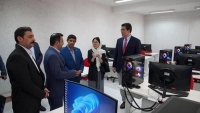
According to ILNA, a ceremony was held at the Technical and Vocational Training Instructor Training Center with the attendance of Gholamhossein Mohammadi, head of Iran's Technical and Vocational Training Organization; Kim Junpyo, the South Korean Ambassador to Iran; Hassan Fartousi, Secretary-General of the Iranian National Committee for UNESCO; Ali Hajilari, Advisor of Iran to the United Nations; and a group of domestic and international officials. At the event, a new project for upgrading equipment and skill diplomacy in Iran was unveiled.
* Skill Diplomacy and Human Capital Enhancement
At the ceremony, Gholamhossein Mohammadi expressed gratitude for the cooperation of domestic and international institutions and emphasized: Iran's Technical and Vocational Training Organization is part of a large ecosystem of informal skill training in the country, encompassing over 600 fixed centers and more than 20,000 private training institutes. He described this project as an effective step toward improving labor productivity, strengthening human capital, developing the national economy, and expanding cultural capacities.
The head of the Technical and Vocational Training Organization noted the nature of this cooperation and called it a successful example of skill diplomacy. He said: This project is built on four pillars: public good, mutual goodwill, a forward-looking perspective—especially in the digital and green economy—and a focus on human development, not merely infrastructure.
According to him, this model can be extended beyond Iran, potentially to the wider West Asia region.
* Investment for Future Generations
The South Korean Ambassador to Iran also expressed his pleasure at attending the ceremony and stated: This project is not merely a physical facility; it is an investment in people and the future, and it can become a foundation for long-term cooperation between Iran and South Korea.
Mr. Kim, referring to Korea's development experience, identified technical and vocational training as one of the key pillars of strengthening society and emphasized: When a person learns a new skill, its impact is passed on to their family, community, and future generations.
* Continuation of Projects Amid Regional Conditions
Iran war changing public perception shaped by Western media, says S. Korean scholar
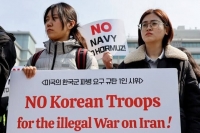
Speaking to the Tehran Times, Yu argues that recent regional developments—including the Gaza war and the subsequent U.S. and Israeli military strikes against Iran—have prompted many South Koreans to reconsider long-standing assumptions about the Islamic Republic. Yet he cautions that any shift remains fragile because South Korean media continue to rely heavily on Western sources for international news, allowing Western narratives to retain a dominant influence over public opinion.
For Yu, the challenge is not merely political. It is fundamentally one of communication, cultural exchange, and mutual understanding. While geopolitical crises may temporarily alter public attitudes, he believes only sustained educational and cultural engagement can produce lasting changes in how South Koreans perceive Iran.
A changing perception—but not yet a lasting one
Yu said he continues to stand by the position he articulated years ago: Iran should not be regarded as an adversary of South Korea, and Seoul would benefit from pursuing a more independent approach toward its relations with Tehran.
Recent military developments, he noted, have led many South Koreans to question prevailing narratives surrounding Iran.
"Many people regarded the recent war as unjust," Yu said, referring to the U.S. and Israeli attacks on Iran. According to him, this has created a noticeable—though limited—shift in public attitudes.
He emphasized, however, that such changes should not be overstated.
"The influence of Western media remains very strong," he explained. "Therefore, this change in perception has not yet become deep or permanent."